
Welcome To The Hearing centre
5 branches conveniently located all over the island!
Affordable state-of-the-art hearing aids
Certified audiologists with over 20 years of experience
We conduct :
Real ear measurement(REM) is a way to check that a hearing aid is actually doing what it’s supposed to do — inside the person’s real ear, not just on a computer screen.
Speech discrimination test (also called word recognition testing) checks how clearly someone understands speech — not just whether they can hear that sound is happening, but whether they can make out the actual words.
Tympanometry is a quick test that checks how well the eardrum and middle ear are moving — it’s about mechanics, not hearing sensitivity.

Patient Satisfaction Rate
Ms. Margaret Ong
“I’m very glad to have found The Hearing Centre, until today they are still giving me top-notch service.”
Mr. Yang Jun Xi
Thanks to Ms. Brenda Fu’s Phonak recommendation, my son’s response and attention have greatly improved!
Mdm. See Ah Chai
“…to date, my mother has had 3 hearing devices and each time, they attend to my mother with care.”
Mdm. Premila
“After using hearing aid, life became more easy. I was able to hear when somebody talked softly.”

With our affordable, state-of-the-art hearing aids, certified audiologists, and over 20 years of experience, Our Hearing Specialist in Singapore helps you reconnect confidently with conversations and activities you love all at competitive prices.
Real experiences from patients who trust our audiologists for clear, accurate, and compassionate medical care.
Evlin Grecia Ensin

B K Shalini

Ardeza Gela Larubis

Felishia Sharon Rinee

Every ear canal is a different shape and size, so the same hearing aid settings can sound different from person to person
Manufacturer default settings are based on an "average" ear — REM checks whether the fitting matches what this person's ear and prescription actually need
It verifies the aid meets a validated prescriptive target (like NAL-NL2 or DSL) for soft, average, and loud sounds
A thin, soft tube (probe microphone) is placed in the ear canal, close to the eardrum, alongside the hearing aid
The audiologist plays sounds (usually speech-like noise) at different volumes
The probe mic measures the actual sound level reaching the eardrum, with the hearing aid on and working
The audiologist compares the "measured" curve to the "target" curve on a graph. If the aid is under- or over-amplifying certain pitches, they adjust the programming until the measured output matches the target closely.
In short: REM turns hearing aid fitting from a guess into a verified, individualized fit.
A speech discrimination test (also called word recognition testing) checks how clearly someone understands speech — not just whether they can hear that sound is happening, but whether they can make out the actual words.
Two people can have the same hearing loss on the audiogram but very different discrimination scores
Poor discrimination despite good audibility can point to problems beyond the inner ear — like the auditory nerve or brain's processing pathways (retrocochlear involvement)
It helps predict how well someone will do with hearing aids — good discrimination usually means aids will help a lot; poor discrimination means aids may improve loudness but not clarity
The person wears headphones (or listens through speakers)
A list of single-syllable words is played at a comfortable, audible volume — loud enough that hearing loss for pitch/volume isn't the limiting factor
The words are usually phonetically balanced (they contain a fair mix of different speech sounds) and often follow a carrier phrase, like "Say the word... ball"
The person repeats back each word, and the tester scores how many they got correct
The result is a percentage score (e.g., 92%, 76%, 60%)
This shows how well the auditory system — ear plus brain — processes and distinguishes speech sounds once they're loud enough to hear
It's different from the audiogram, which just measures the softest sounds someone can detect
the audiogram tells you how loud sound needs to be; the speech discrimination test tells you how well the person understands it once it’s audible.
It doesn't test hearing at all — it tests whether the middle ear system (eardrum + tiny bones) is working mechanically
It's often run alongside the audiogram and speech testing to figure out where a hearing problem is coming from — outer/middle ear (conductive) vs. inner ear/nerve (sensorineural)
Quick, painless, takes just a few seconds per ear
A small probe is placed snugly in the ear canal, creating an airtight seal
The device changes air pressure in the canal (pushing it slightly positive, then negative) while sending in a soft tone
It measures how much sound reflects back off the eardrum at each pressure level
A moving eardrum absorbs more sound; a stiff or fluid-filled eardrum reflects more sound back
A graph called a tympanogram, showing eardrum mobility (compliance) against pressure. The shape tells the story
A graph called a tympanogram, showing eardrum mobility (compliance) against pressure. The shape tells the story
A graph called a tympanogram, showing eardrum mobility (compliance) against pressure. The shape tells the story
Type C (peak shifted to negative pressure) — eardrum moves, but under negative pressure → usually Eustachian tube dysfunction
Ear canal volume — helps flag a perforated eardrum or blocked probe
Middle ear pressure
tympanometry checks if the eardrum “wiggles” properly — a mechanical health check for the middle ear.
Real Ear Measurement
Every ear canal is a different shape and size, so the same hearing aid settings can sound different from person to person
Manufacturer default settings are based on an "average" ear — REM checks whether the fitting matches what this person's ear and prescription actually need
It verifies the aid meets a validated prescriptive target (like NAL-NL2 or DSL) for soft, average, and loud sounds
A thin, soft tube (probe microphone) is placed in the ear canal, close to the eardrum, alongside the hearing aid
The audiologist plays sounds (usually speech-like noise) at different volumes
The probe mic measures the actual sound level reaching the eardrum, with the hearing aid on and working
The audiologist compares the "measured" curve to the "target" curve on a graph. If the aid is under- or over-amplifying certain pitches, they adjust the programming until the measured output matches the target closely.
In short: REM turns hearing aid fitting from a guess into a verified, individualized fit.
Speech discrimination test
A speech discrimination test (also called word recognition testing) checks how clearly someone understands speech — not just whether they can hear that sound is happening, but whether they can make out the actual words.
Two people can have the same hearing loss on the audiogram but very different discrimination scores
Poor discrimination despite good audibility can point to problems beyond the inner ear — like the auditory nerve or brain's processing pathways (retrocochlear involvement)
It helps predict how well someone will do with hearing aids — good discrimination usually means aids will help a lot; poor discrimination means aids may improve loudness but not clarity
The person wears headphones (or listens through speakers)
A list of single-syllable words is played at a comfortable, audible volume — loud enough that hearing loss for pitch/volume isn't the limiting factor
The words are usually phonetically balanced (they contain a fair mix of different speech sounds) and often follow a carrier phrase, like "Say the word... ball"
The person repeats back each word, and the tester scores how many they got correct
The result is a percentage score (e.g., 92%, 76%, 60%)
This shows how well the auditory system — ear plus brain — processes and distinguishes speech sounds once they're loud enough to hear
It's different from the audiogram, which just measures the softest sounds someone can detect
the audiogram tells you how loud sound needs to be; the speech discrimination test tells you how well the person understands it once it’s audible.
Tympanometry
It doesn't test hearing at all — it tests whether the middle ear system (eardrum + tiny bones) is working mechanically
It's often run alongside the audiogram and speech testing to figure out where a hearing problem is coming from — outer/middle ear (conductive) vs. inner ear/nerve (sensorineural)
Quick, painless, takes just a few seconds per ear
tympanometry checks if the eardrum “wiggles” properly — a mechanical health check for the middle ear.
A small probe is placed snugly in the ear canal, creating an airtight seal
The device changes air pressure in the canal (pushing it slightly positive, then negative) while sending in a soft tone
It measures how much sound reflects back off the eardrum at each pressure level
A moving eardrum absorbs more sound; a stiff or fluid-filled eardrum reflects more sound back
A graph called a tympanogram, showing eardrum mobility (compliance) against pressure. The shape tells the story
A graph called a tympanogram, showing eardrum mobility (compliance) against pressure. The shape tells the story
A graph called a tympanogram, showing eardrum mobility (compliance) against pressure. The shape tells the story
Type C (peak shifted to negative pressure) — eardrum moves, but under negative pressure → usually Eustachian tube dysfunction
Ear canal volume — helps flag a perforated eardrum or blocked probe
Middle ear pressure

We offer a wide selection of premium hearing aids for seniors to suit your lifestyle and hearing needs. Whether you're looking for Phonak hearing aids known for Bluetooth connectivity, Signia hearing aids with sleek design, Starkey hearing aids with AI features, or Resound hearing aids offering natural sound quality — our audiologists are here to help you choose the best fit.
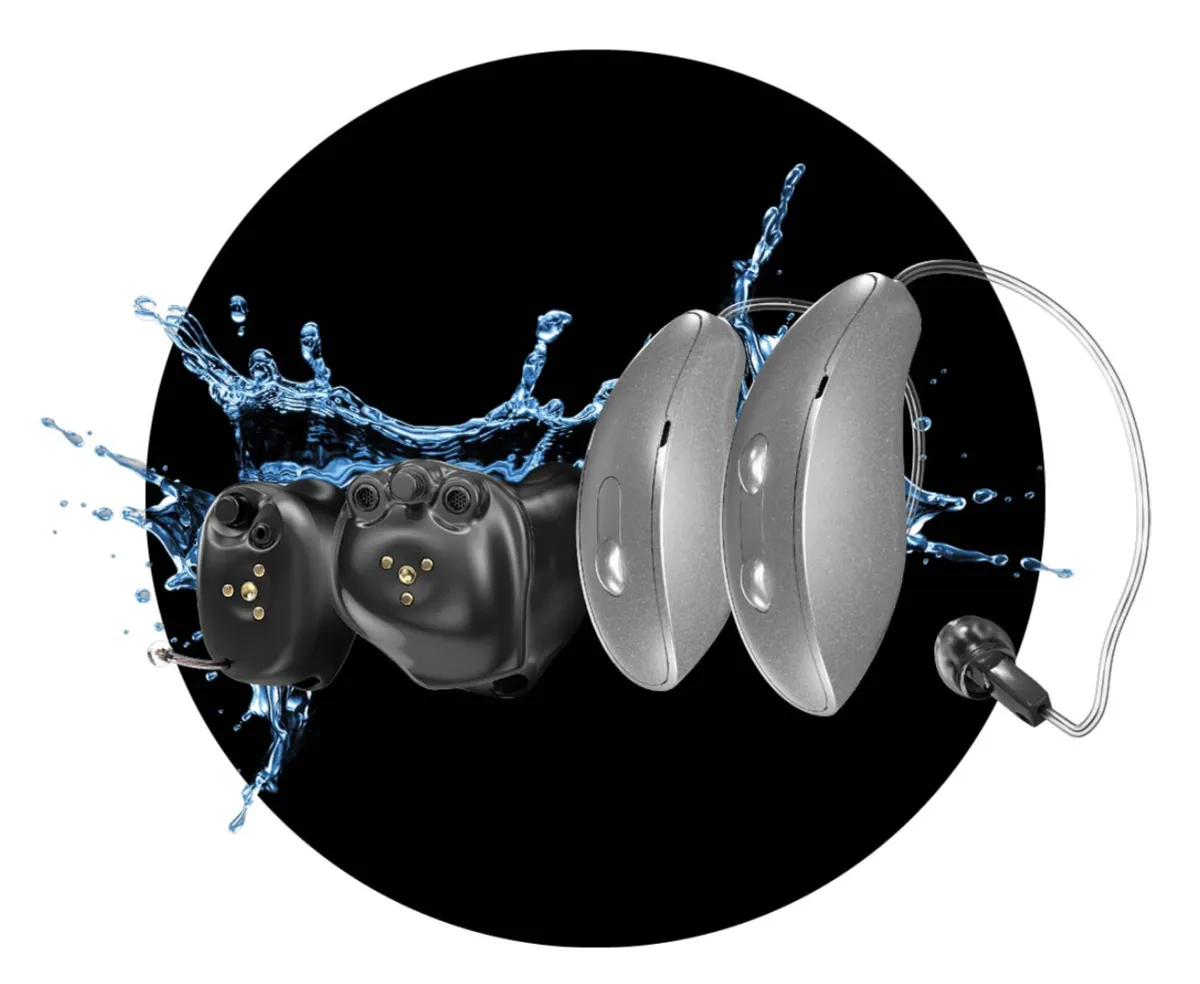
Class : Edge Ai, Signature, Genesis AI, Evolve AI, CROS
Model: 24, 20, 16, 12
Style offered : Behind the ear, Receiver in the canal, Instant fit, Custom (In the ear/ITE, Completely in the canal/CIC, Invisible in the canal/IIC, In the canal/ITC,)
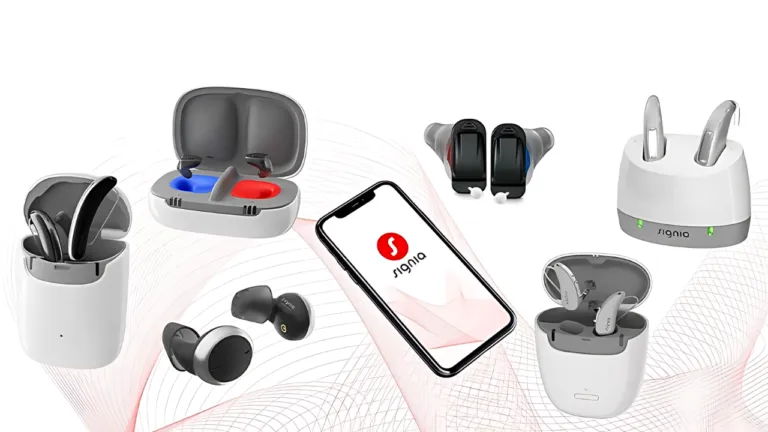
Class : Pure Charge & Go (BCT IX, IX), silk (IX & X), Styletto (IX), Insio (IX), Signia Active (IX, Pro), Sirion Connect, Orion, CROS (BCT & IX)
Model : Essential (level 1), Essential (level 2), Standard( 3), Intermediate (5), Advance(7)
Style offered : Behind the ear, Receiver in the canal, Instant fit, Custom (In the ear/ITE, Completely in the canal/CIC, Invisible in the canal/IIC, In the canal/ITC,)
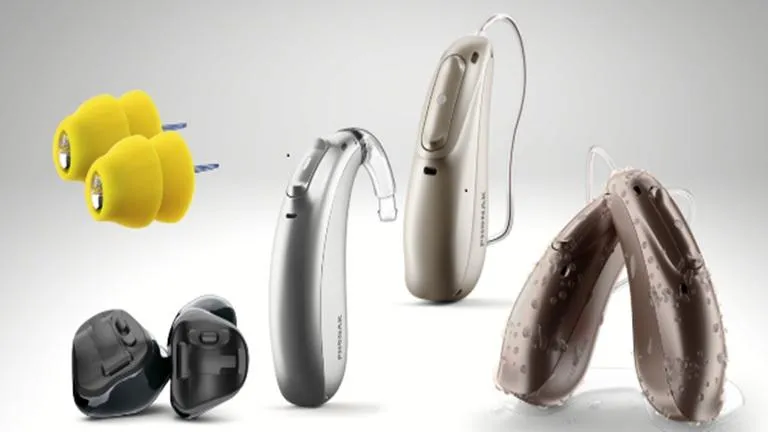
Class : Infinio (Standard & Sphere), Lumity, Paradise, CROS
Model : Essential(30), Standard(50), Business(70), Premium(90)
Style offered : Behind the ear, Receiver in the canal, Custom (In the ear/ITE, Completely in the canal/CIC, Invisible in the canal/IIC, In the canal/ITC)
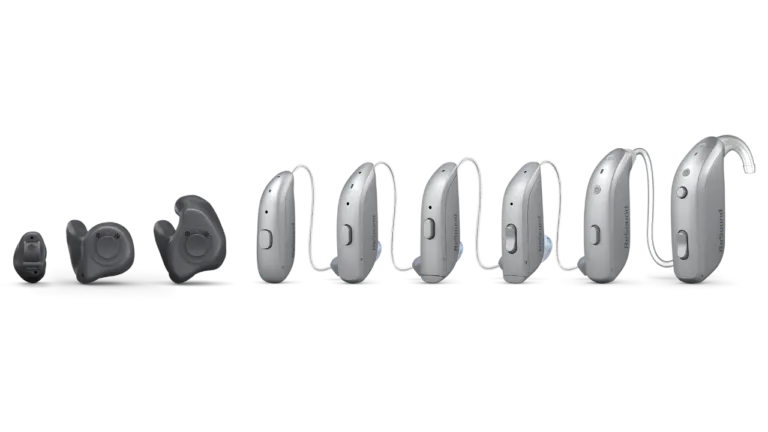
Class : Nexia, Omnia, Resound Key, Enzo Q, Linx Quattro, CROS
Model : Premium, Advance, Select
Style offered : Behind the ear, Receiver in the canal, Instant fit, Custom (In the ear/ITE, Completely in the canal/CIC, Invisible in the canal/IIC, In the canal/ITC,)




Looking for a trusted hearing clinic near you? Our 5 conveniently located branches—Lucky Plaza, Jurong (IMM), Raffles ENT Centre, Ang Mo Kio, and Tampines—are staffed by experienced specialists. Whether you need an ear specialist at Lucky Plaza or expert care at any other hearing clinic in Singapore, we’re here to help you hear better, faster.
304 Orchard Road #05-36 Lucky Plaza, Singapore 238863
2 Jurong East Street 21, #03-179 IMM Building, Singapore 609601
585 N Bridge Rd, Level 8 Raffles Specialist Centre, Singapore 188770
710A Ang Mo Kio Ave 8,#01-2625, Singapore 561710
300 Tampines Avenue 5 #09-02 (inside Regus) Tampines Junction (NTUC Centre), Singapore 529653